
Introduction
In modern industrial and daily life scenarios, Variable Frequency Drives (VFDs) play a crucial role. In factories, you can see large - scale motors driving conveyor belts, pumps, and various mechanical equipment. These motors need to adjust their rotational speeds according to different production requirements. For example, in a beverage bottling factory, the speed of the conveyor belt needs to be adjusted to match the filling speed of the bottles. VFDs are used to precisely control the motor speed, ensuring smooth production flow and high - quality product output.
Another common application is in air - conditioning systems. In large commercial buildings or industrial plants, the cooling load varies throughout the day. By using VFDs to control the speed of the compressor motors in air - conditioners, the system can adjust its cooling capacity in real - time. This not only improves the comfort level of the indoor environment but also achieves significant energy - saving effects. According to statistics, in some large - scale air - conditioning systems, using VFDs can save up to 30% - 50% of energy consumption compared to traditional fixed - speed systems.
Given the wide - spread application and remarkable energy - saving and performance - improving effects of VFDs, understanding their working principles becomes extremely important. Whether you are an engineer in the electrical and mechanical field, a technician responsible for equipment maintenance, or just someone with a strong interest in electrical technology, grasping the working principle of VFDs can help you better utilize and maintain related equipment, and even inspire you to innovate and improve in relevant applications. So, let’s dive into the fascinating world of VFD working principles.
What is a VFD?
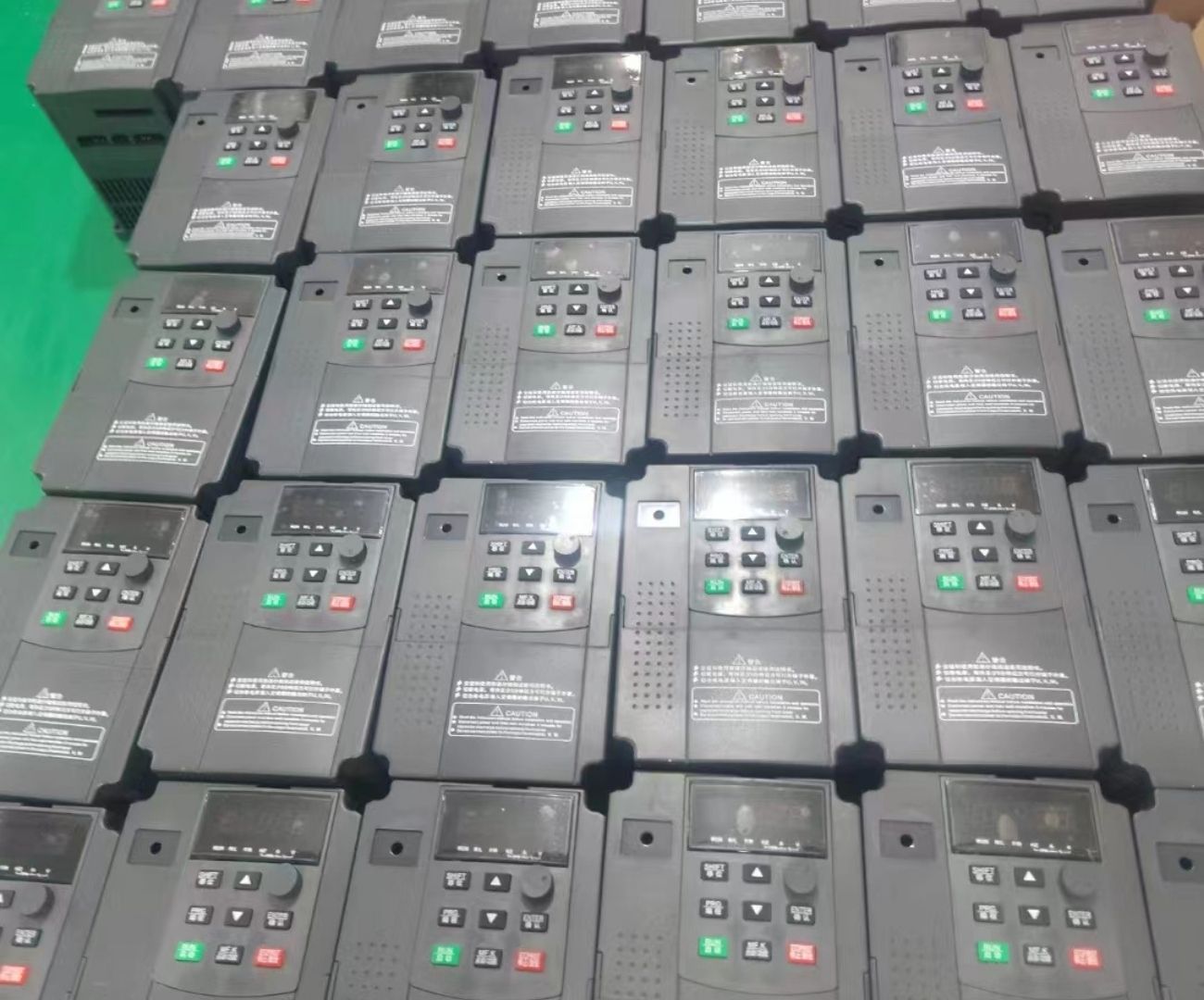
A Variable Frequency Drive (VFD), also known as a variable - speed drive, adjustable - frequency drive, or frequency converter, is a power electronic device. Its primary function is to control the speed of an alternating - current (AC) motor by varying the frequency and voltage of the power supplied to the motor.
In traditional motor control systems, motors are often directly connected to the power grid with a fixed frequency (such as 50Hz or 60Hz in most regions). This means the motor runs at a relatively fixed speed, determined by the power grid frequency and the motor’s design characteristics. For example, a standard induction motor connected directly to a 50Hz power grid will rotate at a speed close to its synchronous speed, which is calculated by the formula $n = \frac{120f}{p}$, where $n$ is the synchronous speed in revolutions per minute (RPM), $f$ is the frequency of the power supply, and $p$ is the number of poles of the motor.
However, in many real - world applications, such as in industrial manufacturing processes, ventilation systems, and water - treatment plants, the motor needs to operate at different speeds according to the actual load requirements. This is where VFDs come in. A VFD can adjust the frequency of the power supplied to the motor, which in turn changes the motor’s rotational speed. For instance, if the frequency is reduced from 50Hz to 25Hz, the motor speed will approximately halve, assuming a constant - torque load.
The ability to vary the motor speed provides several significant advantages. Firstly, it leads to energy savings. When a motor operates at a reduced speed, it consumes less power. In industrial fans and pumps, for example, reducing the motor speed by just 20% can result in energy savings of up to 50% according to the affinity laws. Secondly, it enables better process control. In a textile manufacturing plant, VFD - controlled motors can precisely adjust the speed of spindles and looms, improving the quality of the fabric produced. Thirdly, VFDs can provide soft - starting capabilities. Instead of the sudden high - current startup of a traditional motor, a VFD gradually increases the voltage and frequency, reducing mechanical stress on the motor and connected equipment, and extending their service life.
The Core Components of a VFD
Rectifier
The rectifier is the first key component in a VFD. Its main function is to convert the incoming alternating - current (AC) power into direct - current (DC) power. This conversion is essential because most of the subsequent processing in a VFD is more effectively carried out with DC power.
There are two common types of rectifiers used in VFDs: diode rectifiers and thyristor rectifiers.
A diode rectifier is composed of a set of diodes. In a single - phase full - wave diode rectifier, for example, two diodes are used in a center - tapped transformer configuration. When the AC input voltage is positive in one half - cycle, one diode conducts, allowing current to flow in a certain direction. When the voltage is negative in the next half - cycle, the other diode conducts, and the current direction is adjusted to be the same as in the previous half - cycle. In a three - phase diode rectifier, which is more commonly used in industrial applications due to its higher power - handling capacity, six diodes are arranged in a bridge - like structure (also known as a three - phase full - wave bridge rectifier). This setup enables continuous DC output with less ripple compared to single - phase rectifiers. The advantage of diode rectifiers is their simplicity and reliability. They have no moving parts and are relatively inexpensive. However, they have a fixed voltage - conversion ratio and cannot control the magnitude of the DC output voltage during operation.
On the other hand, a thyristor rectifier (also called a silicon - controlled rectifier, SCR) offers more flexibility in voltage control. Thyristors are semiconductor devices that can be triggered to conduct current at a specific point in the AC cycle. By controlling the firing angle of the thyristors, the average value of the DC output voltage can be adjusted. For instance, in a three - phase thyristor rectifier, if the firing angle is increased, the time during which the thyristors conduct in each AC cycle is reduced, resulting in a lower average DC output voltage. This makes thyristor rectifiers suitable for applications where variable DC voltage is required. But they are more complex to control compared to diode rectifiers, and the control circuits need to be carefully designed to ensure proper triggering and stable operation.
Filter
After the rectifier converts AC to DC, the resulting DC voltage usually has some fluctuations or ripples. This is where the filter comes in. The filter’s main role is to smooth out these voltage ripples, providing a more stable DC voltage for the subsequent components in the VFD.
There are two main types of filters used: capacitor filters and inductance filters.
A capacitor filter, as the name implies, uses capacitors to smooth the voltage. Capacitors store electrical charge. When the rectified DC voltage is higher than the average value, the capacitor charges up, storing the excess energy. When the rectified voltage drops below the average value, the capacitor discharges, supplying the stored energy to maintain a relatively constant voltage level. In a simple single - phase rectifier circuit, a large - value electrolytic capacitor is often connected in parallel with the rectifier output. In three - phase VFD applications, multiple capacitors may be arranged in a more complex configuration, such as in a pi - type filter circuit, to further reduce the voltage ripple. Capacitor filters are very effective in reducing high - frequency ripples and are relatively small in size and cost - effective for low - to medium - power VFDs.
An inductance filter, on the other hand, uses an inductor (coil). Inductors oppose changes in current. When the current through an inductor changes, a back - electromotive force (EMF) is induced, which tends to smooth out the current variations. In a VFD, an inductor is usually connected in series with the rectifier output. As the rectified DC current passes through the inductor, the inductor resists sudden changes in the current, resulting in a more stable current flow and a smoother DC voltage across the load. Inductance filters are better at handling high - power applications and can effectively reduce low - frequency ripples. However, inductors are typically larger, heavier, and more expensive than capacitors, especially for high - power and high - inductance requirements.
In some high - performance VFDs, a combination of both capacitor and inductor filters (LC filters) is used. This combination can take advantage of the strengths of both types of filters, effectively reducing both high - frequency and low - frequency ripples, and providing a very stable DC voltage source for the inverter stage.
Inverter
The inverter is one of the most critical components in a VFD as it is responsible for converting the smooth DC voltage from the filter into an alternating - current (AC) voltage with a variable frequency and adjustable voltage level. This is achieved through a process called Pulse - Width Modulation (PWM).
In a basic inverter circuit, typically composed of power - semiconductor switches (such as insulated - gate bipolar transistors, IGBTs), the DC voltage is switched on and off at a high frequency. By varying the width of these on - time pulses (pulse width), the average voltage of the output waveform can be adjusted. For example, if the on - time of the pulses is increased, the average voltage of the output waveform will be higher. To generate an AC output, the switching pattern of the IGBTs is carefully controlled. In a three - phase inverter, there are three sets of IGBTs, each corresponding to one phase of the AC output. The switching of these IGBTs is coordinated in such a way that a three - phase AC voltage with the desired frequency and voltage is produced.
The PWM technique has several advantages. Firstly, it helps to reduce the harmonic content in the output waveform. Harmonics are unwanted frequency components in the AC output that can cause problems such as increased heating in the motor, electromagnetic interference, and reduced motor efficiency. By using PWM, the inverter can approximate a sinusoidal waveform more closely. The high - frequency switching of the IGBTs creates a series of pulses whose widths are modulated to match the shape of a sine wave. When these pulses are filtered by the motor’s inductance and capacitance (or an external filter), the resulting output is a relatively smooth sinusoidal - like AC voltage with significantly reduced harmonic distortion. Secondly, PWM allows for precise control of the output voltage and frequency. By adjusting the pulse - width and the switching frequency, the VFD can accurately meet the speed and torque requirements of the motor in different operating conditions. For example, in a variable - speed elevator system, the VFD uses PWM to smoothly adjust the motor speed during acceleration, deceleration, and constant - speed operation, ensuring a comfortable and safe ride for passengers.
Control Unit
The control unit is the “brain” of the VFD, which plays a crucial role in regulating the entire operation of the drive. Its main function is to adjust the output voltage and frequency of the inverter according to the specific requirements of the motor and the application.
There are several common control strategies used in the control unit of a VFD, such as vector control and direct torque control.
Vector control, also known as field - oriented control, is a sophisticated control method. It is based on the principle of decoupling the stator current of an induction motor into two components: a torque - producing component and a flux - producing component. By independently controlling these two components, the motor’s torque and speed can be precisely regulated, similar to the control of a DC motor. In vector control, the control unit first measures the motor’s parameters, such as stator resistance, inductance, and rotor speed. Then, through complex mathematical calculations and coordinate transformations (such as Clarke and Park transformations), it generates the appropriate control signals for the inverter switches. This allows the VFD to achieve high - dynamic - response control, accurate speed regulation, and good low - speed performance. For example, in a high - precision industrial robotic arm, vector - controlled VFDs are used to ensure that the motors can quickly and accurately follow the desired motion trajectories, providing smooth and precise movements.
Direct torque control (DTC) is another advanced control strategy. It directly controls the torque and flux of the motor by selecting appropriate voltage vectors from the inverter. The control unit continuously estimates the motor’s torque and flux based on the measured stator voltage and current. Then, according to the difference between the reference torque and flux and the actual values, it selects the optimal voltage vector from a predefined voltage - vector table to apply to the motor. DTC has the advantage of simple control algorithms and fast torque response. It can quickly adjust the motor’s torque in response to changes in the load, making it suitable for applications that require rapid torque changes, such as in electric vehicles, where quick acceleration and deceleration are needed. However, DTC may have some drawbacks, such as higher torque ripple compared to vector control under certain operating conditions, which may require additional filtering or compensation techniques in some applications.
How a VFD Works Step - by - Step
Power Input
The first step in the operation of a VFD is the power input. VFDs are designed to receive alternating - current (AC) power from the electrical grid. In industrial applications, common power input specifications include 480V, 60Hz AC in the United States and some other regions, while in many parts of the world, 380V, 50Hz AC is a typical input. For example, in a large - scale manufacturing plant, the incoming power supply to the VFD - controlled motors might be a three - phase 480V, 60Hz system. This incoming AC power is the energy source that the VFD will transform to control the motor speed.
Rectification
Once the AC power is input into the VFD, it enters the rectifier stage. As mentioned before, the rectifier’s function is to convert the AC power into direct - current (DC) power. In a three - phase diode rectifier (widely used in VFDs), there are six diodes arranged in a bridge - like configuration. During the positive half - cycle of each phase of the AC input, three diodes conduct, allowing current to flow in one direction. When the voltage polarity reverses during the negative half - cycle, the other three diodes conduct, but the current direction through the load (the rest of the VFD components) remains the same. For instance, if we consider a simple sinusoidal AC voltage input, during the first half - cycle where the voltage is positive, the diodes are arranged in such a way that they direct the current through the circuit in a particular path. When the voltage becomes negative in the next half - cycle, the diodes change their conducting state, but the current through the load still flows in the same DC - like direction. The output of the rectifier is a pulsating DC voltage, which has a series of peaks and valleys corresponding to the different phases of the AC input.
Filtering
After the rectifier produces the pulsating DC voltage, the filtering stage comes into play. The filter is used to smooth out these voltage ripples. A capacitor - based filter is often used. Capacitors have the property of storing electrical charge. When the rectified DC voltage is at its peak, the capacitor charges up, storing the excess energy. As the voltage starts to drop between the peaks, the capacitor discharges, supplying the stored energy to the circuit. This action helps to maintain a more constant voltage level. Before filtering, the DC voltage waveform has significant fluctuations. But after passing through the filter, the waveform becomes much smoother, with only small remaining ripples. For example, in a low - power VFD, a single large - value electrolytic capacitor might be sufficient to reduce the voltage ripple to an acceptable level. In higher - power applications, a more complex filter circuit, such as an LC filter (a combination of inductors and capacitors), may be used to further reduce the ripple and provide a very stable DC voltage source for the next stage, the inverter.
Inversion
The inverter is the key component that converts the smooth DC voltage from the filter back into an AC voltage with a variable frequency and adjustable voltage level. This is achieved through Pulse - Width Modulation (PWM). In an inverter circuit, typically using insulated - gate bipolar transistors (IGBTs), the DC voltage is switched on and off at a high frequency. To generate a sinusoidal - like AC output, the control unit of the VFD varies the width of the on - time pulses of the IGBTs. For example, to produce a positive - going half - cycle of the AC output, the IGBTs are switched in a pattern where the on - time of the pulses gradually increases and then decreases. During the negative - going half - cycle, the switching pattern is reversed. By carefully controlling the switching frequency and the pulse - width, the inverter can approximate a sine wave. The high - frequency switching of the IGBTs creates a series of pulses. When these pulses are passed through the motor (which has inductance and some capacitance), the inductance of the motor acts as a natural filter, smoothing out the pulses and resulting in an output voltage that closely resembles a sinusoidal AC voltage. The frequency of the output AC voltage is determined by the rate at which the IGBTs are switched. If the IGBTs are switched at a higher frequency, the output AC frequency will be higher, and vice versa.
Motor Control
The final step in the VFD operation is motor control. The VFD adjusts the frequency and voltage of the output power according to the specific requirements of the motor. The relationship between the motor speed ($n$), the frequency ($f$) of the power supply, and the number of poles ($p$) of the motor is given by the formula $n=\frac{120f}{p}$. For example, if a four - pole ($p = 4$) induction motor is connected to a VFD, when the VFD outputs a frequency of 50Hz, the synchronous speed of the motor ($n$) can be calculated as $n=\frac{120\times50}{4}=1500$ RPM. If the load on the motor changes, the VFD’s control unit senses this change (either through feedback from sensors on the motor or by pre - set control algorithms). To maintain the desired motor speed or torque, the VFD will adjust the output frequency and voltage. According to the V/F (voltage - to - frequency) control principle, which is commonly used in VFDs for constant - torque applications, the voltage is adjusted proportionally to the frequency. As the frequency is decreased to slow down the motor, the voltage is also reduced in a specific ratio to ensure proper motor operation and to prevent over - or under - excitation of the motor. This precise control of frequency and voltage allows the VFD to operate the motor efficiently under various load conditions, whether it’s a light - load situation in a ventilation system during low - occupancy hours or a high - load situation in a manufacturing process when full - power operation is required.
Applications and Significance of VFDs
VFDs have found widespread applications in various fields, playing a crucial role in modern industrial and daily - life operations.
Industrial Applications
In industrial settings, VFDs are extensively used in equipment such as fans, pumps, and conveyors. For fans, in a large - scale industrial ventilation system, the air volume requirements change according to different production processes or environmental conditions. By using VFDs to adjust the fan motor speed, the ventilation system can provide the appropriate air volume precisely. This not only ensures a comfortable working environment but also saves energy. For example, in a manufacturing plant that operates around the clock, during the night shift when the production intensity is lower, the VFD - controlled fans can run at a reduced speed, consuming less power.
Pumps are another area where VFDs are highly beneficial. In water - treatment plants, the water flow rate needs to be adjusted according to the water consumption of the city or industrial processes. A traditional fixed - speed pump either operates at full capacity all the time, wasting energy when the water demand is low, or has to be turned on and off frequently, which reduces the pump’s lifespan. With a VFD, the pump motor speed can be adjusted smoothly, matching the water flow requirements accurately. This not only saves energy but also extends the service life of the pump. In a large - scale chemical plant, VFD - controlled pumps are used to transport various chemical fluids. The precise control of the flow rate by VFDs helps to ensure the stability of the chemical reactions and the quality of the products.
Commercial Applications
In commercial buildings, VFDs are commonly used in Heating, Ventilation, and Air - Conditioning (HVAC) systems. In a large shopping mall, the indoor temperature and humidity need to be maintained at a comfortable level for customers and employees. The load on the HVAC system varies throughout the day, depending on factors such as the number of people in the mall, the outdoor temperature, and the time of day. VFDs control the speed of the compressor motors, fans, and pumps in the HVAC system. When the load is low, such as in the early morning before the mall opens, the VFDs reduce the motor speeds, consuming less energy. When the mall is crowded in the afternoon, the VFDs increase the motor speeds to meet the higher cooling or heating demands. This intelligent control not only improves the comfort of the indoor environment but also leads to significant energy savings. According to some studies, using VFDs in commercial HVAC systems can reduce energy consumption by 30% - 50%.
Residential Applications
Even in our daily lives, VFDs are making an impact. In modern high - efficiency air - conditioners, VFDs are used to control the compressor motor speed. Traditional fixed - speed air - conditioners either operate at full capacity or turn off completely. When they operate at full capacity, they consume a large amount of electricity, and when they turn off, the indoor temperature may fluctuate. VFD - controlled air - conditioners can adjust the compressor speed according to the indoor temperature. When the room temperature is close to the set value, the compressor runs at a lower speed, consuming less power. This results in a more stable indoor temperature and lower energy consumption. In addition, some high - end washing machines also use VFDs to control the motor speed. Different washing programs require different motor speeds, and VFDs enable the washing machine to adjust the speed precisely, improving the washing effect and reducing noise.
Significance of VFDs
The significance of VFDs is multi - fold. Firstly, in terms of energy conservation, as mentioned above, by adjusting the motor speed according to the actual load, VFDs can significantly reduce energy consumption. In industrial and commercial applications, where large - scale motors are used, this energy - saving effect can lead to substantial cost savings over time. With the increasing global focus on energy conservation and environmental protection, VFDs play a crucial role in reducing the overall energy consumption of industries and buildings.
Secondly, VFDs improve the performance of equipment. Precise speed control allows for better process control in industrial applications. In a textile factory, VFD - controlled motors can ensure that the spindles and looms operate at the optimal speed, resulting in higher - quality fabric production. In HVAC systems, the smooth adjustment of motor speeds by VFDs provides a more stable indoor environment, enhancing the comfort of occupants.
Finally, VFDs can extend the lifespan of motors and related equipment. The soft - starting feature of VFDs reduces the inrush current during startup, which is a major cause of motor wear and tear. By gradually increasing the motor speed, VFDs also reduce mechanical stress on the motor and connected equipment, such as belts, pulleys, and shafts. This leads to fewer maintenance requirements and longer equipment service life, reducing overall operational costs.
FAQs about VFD Working Principle
How does a VFD affect the motor windings?
When a VFD is connected to a motor, the variable - frequency and variable - voltage output can have several impacts on the motor windings. Firstly, the high - frequency components in the VFD - output waveform can cause additional losses in the windings, such as skin effect and proximity effect. The skin effect makes the current tend to flow on the outer surface of the conductor at high frequencies, increasing the effective resistance of the winding. The proximity effect, which occurs when conductors are close to each other, also contributes to higher resistance and power losses. Secondly, the steep - fronted voltage pulses in the VFD output can lead to higher voltage stress on the motor windings, especially at the first few turns closest to the VFD. This may increase the risk of insulation breakdown over time. To mitigate these issues, special motor designs with improved insulation materials and winding configurations are sometimes used in VFD - driven applications. For example, some motors have insulation that can better withstand the high - voltage transients, and the winding layout may be optimized to reduce the impact of high - frequency losses.
What are the compatibility issues between VFDs and the power grid?
VFDs can cause several compatibility issues with the power grid. One major issue is harmonic pollution. As VFDs use power - semiconductor switches (such as IGBTs) to generate variable - frequency AC outputs, they introduce harmonics into the power grid. These harmonics are unwanted frequency components that can distort the sinusoidal voltage and current waveforms of the grid. Harmonics can cause overheating in transformers, motors, and other grid - connected equipment. For instance, in a power - distribution system, harmonic - induced overheating in transformers can reduce their efficiency and lifespan. Another compatibility issue is the power - factor problem. VFDs may have a low power factor, especially at light - load conditions. A low power factor means that the apparent power (the product of voltage and current) is higher than the real power (the useful power consumed by the load), which can lead to increased energy losses in the grid and reduced capacity utilization of the power - distribution equipment. To address these issues, techniques such as installing harmonic filters (active or passive) and power - factor - correction devices are often employed. Active harmonic filters can actively inject currents to cancel out the harmonics generated by the VFDs, while power - factor - correction circuits can improve the power - factor of the VFD - grid system.
How to select the right VFD for a specific application?
Selecting the right VFD for an application requires considering several key factors. First, the motor’s power rating and type need to be determined. The VFD should have a power - handling capacity that can match or slightly exceed the motor’s rated power to ensure reliable operation. For example, if you have a 10 - kW induction motor, you should choose a VFD with a rated power of at least 10 kW, but in some cases, a slightly larger - capacity VFD (e.g., 11 - kW) may be selected to account for potential overloads. Second, the control requirements of the application are crucial. If precise speed control and high - dynamic - response are needed, such as in a servo - motor - controlled robotic arm, a VFD with advanced control strategies like vector control or direct - torque control should be chosen. For applications with less - stringent control requirements, such as a simple ventilation fan, a basic VFD with V/F control may be sufficient. Third, the environmental conditions where the VFD will operate also matter. In harsh environments with high humidity, dust, or corrosive gases, a VFD with appropriate protection features (e.g., IP - rated enclosures) should be selected to prevent damage to the internal components. Additionally, cost - effectiveness, ease of installation and maintenance, and communication capabilities (if the VFD needs to be integrated into a larger control system) are also important considerations when choosing a VFD for a specific application.
Conclusion
In summary, the working principle of a Variable Frequency Drive (VFD) involves a series of complex yet highly coordinated processes. Starting from the power input, the VFD first rectifies the incoming AC power into DC power, then filters out the voltage ripples to provide a stable DC source. The inverter, a key component, converts this DC power back into AC power with a variable frequency and adjustable voltage through Pulse - Width Modulation (PWM). The control unit, acting as the “brain” of the VFD, precisely regulates the entire operation according to the motor’s requirements and the application scenarios, using control strategies such as vector control and direct torque control.
VFDs have become an indispensable part of modern industrial and daily - life applications. In industries, they enable energy - efficient operation of various equipment like fans, pumps, and conveyors, while also improving process control and equipment lifespan. In commercial and residential settings, VFDs play a crucial role in HVAC systems and household appliances, enhancing comfort and reducing energy consumption.
Looking ahead, the future of VFD technology holds great promise. With the continuous development of power - semiconductor devices, control algorithms, and materials science, we can expect VFDs to become more efficient, compact, and intelligent. New control strategies may emerge to further optimize motor performance and energy utilization. Additionally, as the world increasingly focuses on energy conservation and sustainable development, VFDs will play an even more significant role in reducing energy waste and promoting a greener future across all sectors that rely on motor - driven equipment. Whether it’s in large - scale industrial manufacturing or in our daily - use household appliances, VFDs will continue to drive innovation and progress in the field of electrical and mechanical control.
Leave Comment